
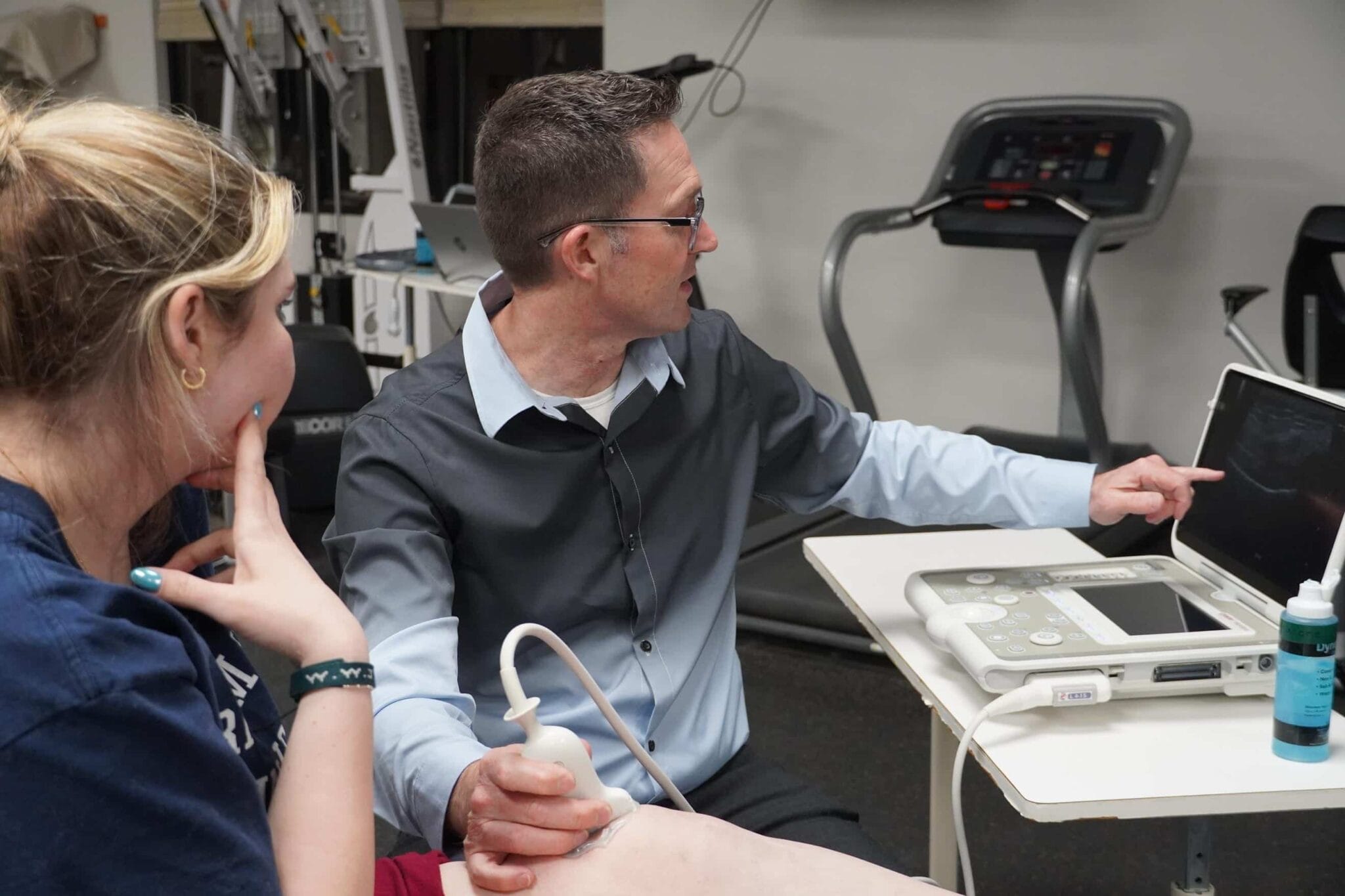
Say goodbye to aches and pains with ultrasound.
Ultrasound is a safe, non-invasive method used in physical therapy to help assess musculoskeletal (MSK) conditions. By using high-frequency sound waves, your physical therapist can create real-time images of muscles, tendons, ligaments and other soft tissues. This helps guide treatment, manage pain and support your recovery.
It’s effective for patients of nearly all ages, including those who are pregnant or have medical implants and involves no radiation and no known side effects.
What is diagnostic ultrasound?
Diagnostic ultrasound differs from therapeutic ultrasound. Instead of applying heat, it uses sound waves to create live images of the affected area. The technology is similar to prenatal ultrasounds, but is used for orthopedic and musculoskeletal conditions, including:
- Tendon tears & tendinopathy
- Muscle strains & tears
- Ligament injuries
- Bursitis & joint effusions
- Nerve entrapments
- Soft tissue masses
This safe imaging tool allows your physical therapist to quickly assess injuries, confirm diagnosis and plan effective treatments.
Why do physical therapists use diagnostic ultrasound?
Physical therapists use diagnostic ultrasound to:
- Confirm or clarify a diagnosis
- Determine the severity of an injury
- Guide the development of a treatment plan
- Monitor tissue healing over time
Seeing your injury in real-time helps you better understand your condition and take an active role in your recovery. Therapists can make more informed decisions and tailor interventions based on what they observe, rather than relying solely on symptoms.
At Mountain Land Physical Therapy Partners, our highly trained physical therapists will design a treatment plan based on your condition, symptoms and medical history.
What to expect during an ultrasound session
During your appointment
- A physical therapist reviews your symptoms and explains what they plan to assess
- A small handheld probe is applied to the affected area using water-based gel to reduce friction
- You can remain fully dressed except for the area being examined
- The procedure is painless, though slight pressure may be felt in sensitive areas
- Sometimes, the affected area is compared with the opposite side to get a complete assessment
Duration and follow-up
- Sessions usually last 20 to 30 minutes
- You and your therapist can view the images in real-time
- Follow-up scans may track progress and guide care adjustments

Schedule your diagnostic ultrasound
If you are struggling with joint or muscle pain and want real answers without waiting weeks for imaging, diagnostic MSK ultrasound may be the solution.
Find a Mountain Land Physical Therapy Partners location near you in Utah, Idaho or Montana to learn how our ultrasound services can aid your recovery.
Frequently Asked Questions
How is diagnostic ultrasound different from an MRI or X-ray?
- Ultrasound is excellent for soft tissue imaging and provides live, real-time feedback.
- MRI is better for deep or complex internal structures but is more expensive and less immediately available.
- X-rays show bones but not muscles or tendons.
Will I be able to see the images during the session?
Yes. The therapist will explain what you see, helping you understand your condition.
Does it hurt?
No. You may feel gentle pressure where the area is tender, but the procedure itself is non-invasive and comfortable.
Is it safe?
Yes. Diagnostic ultrasound is non-ionizing, radiation-free and safe for nearly all patients, including pregnant women and those with medical implants.
What can it help diagnose?
Diagnostic ultrasound can diagnose soft tissue conditions of the shoulder, elbow, hand, lower back, upper back, hip, knee and ankle, including:
- Rotator cuff issues
- Tendonitis/tendinosis
- Muscle strains or tears
- Ligament injuries
- Plantar fasciitis
- Patellar tendon problems
- Hip and shoulder impingements
Is a diagnostic ultrasound covered by insurance?
Coverage varies by plan, but diagnostic ultrasound is typically included as part of a physical therapy program. A physician referral is usually not required, although some programs, such as workers’ compensation, may require prior authorization. Our staff will verify your benefits and let you know what to expect before your session.
Do I need a referral?
Not usually. Most patients can access physical therapy and diagnostic ultrasound directly. Exceptions usually involve certain insurance or workers’ compensation programs.