
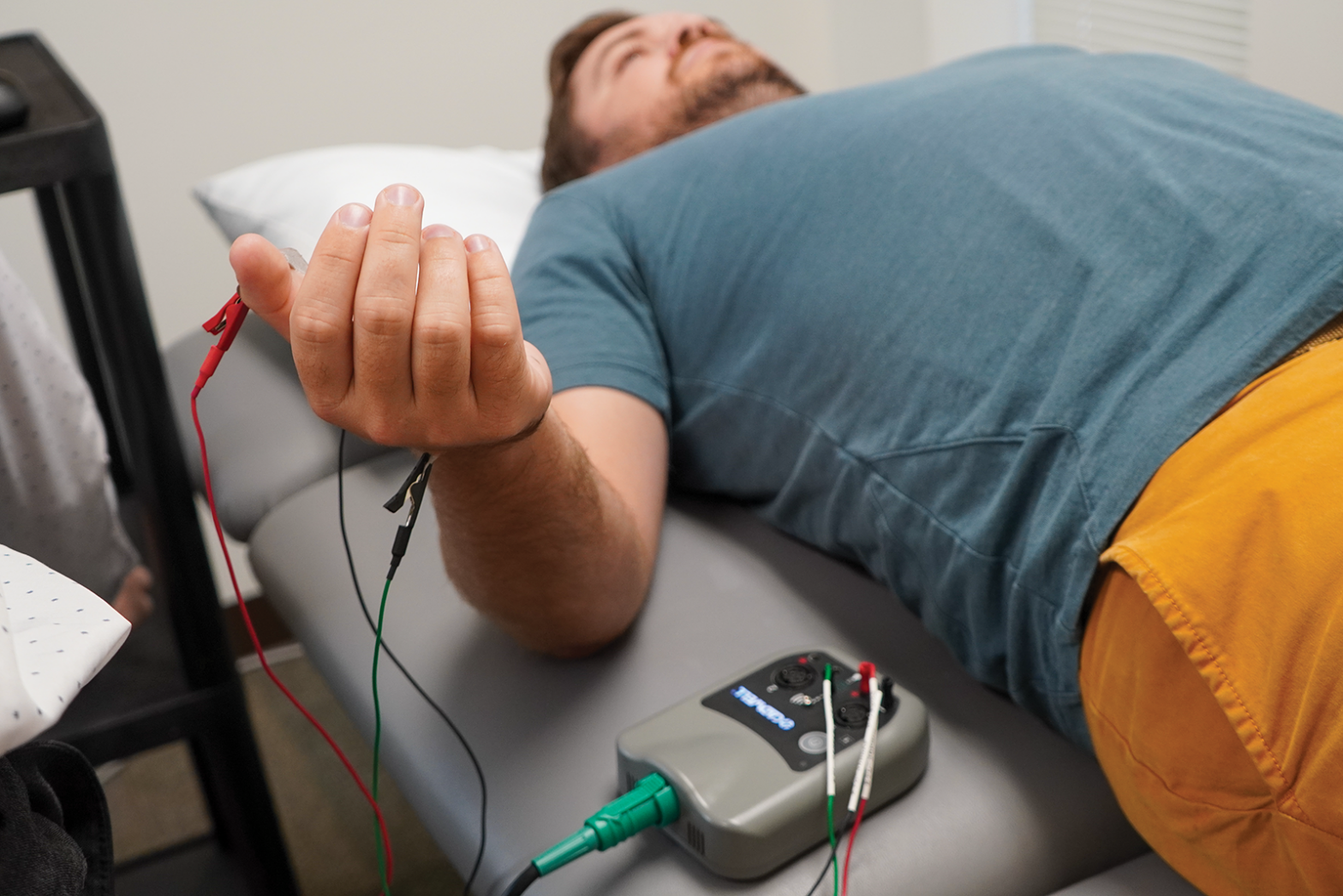
EMG and nerve conduction tests help us see how your muscles and nerves are working together. At Diagnostic Solutions we use these tests to find out what might be causing your pain, weakness, numbness, or tingling.
Using EMG testing in our clinic lets us combine advanced technology with our hands-on experience. With both detailed testing and our clinical experience, we can find the right diagnosis and create a treatment plan that fits your needs.
In some cases, your provider might suggest other imaging tests, such as a diagnostic ultrasound to get a clearer picture of soft tissue or nerve issues.
Types of testing we provide
We offer electromyography (EMG) and nerve conduction testing. These tests are often performed together to give a more complete picture of how your muscles and nerves are working.
EMG testing
Electromyography, also called EMG, is a diagnostic test using needles with a very small microphone that listens to and assesses the health of your muscles and the nerves. EMG testing helps identify muscle problems, damage or issues with how signals travel between muscles and nerves.
Why is this testing done?
EMG testing is typically recommended when symptoms suggest a problem with the muscles, nerves, or how they communicate with each other.
Common symptoms may include:
- Pain, numbness, or tingling in the hand or wrist
- Pain in the limbs
- Muscle pain or cramping
- Numbness
- Tingling
- Muscle weakness
What types of conditions can this testing help diagnose?
EMG testing can help identify or rule out a wide range of neuromuscular conditions by showing where nerve or muscle function may be affected. These include:
- Conditions affecting the nerve root, such as a herniated disc, which may contribute to neck pain or back pain
- Conditions affecting nerves outside the spinal cord, such as carpal tunnel syndrome or peripheral neuropathy
- Muscle disorders, including muscular dystrophy or polymyositis
- Conditions affecting the connection between nerves and muscles, such as myasthenia gravis
- Disorders affecting motor neurons in the brain or spinal cord, such as ALS or polio
How to prepare for your appointment
Preparing for your appointment is simple. Following these guidelines can help ensure accurate results:
- Wear loose-fitting clothing
- Do not apply lotions, creams or Vasoline
- Do not wear jewelry or watches on your wrists and fingers
(Necklaces and facial jewelry should not interfere with testing) - There are no restrictions on eating, drinking or taking medications (except Mestonin or muscle relaxers)
If you have any questions or concerns before the test, your electrophysiologist will be happy to help.
What to expect during the EMG appointment
Knowing what to expect during an EMG can help you feel more comfortable and prepared. The test is usually completed in one visit and is designed to collect detailed information while keeping discomfort to a minimum.
The testing process
During the EMG appointment, a small electrical current may be applied to the skin to measure how well your nerves conduct signals. This part of the test is brief and helps guide the rest of the evaluation.
Next, a needle electrode is inserted into the affected muscle. You may feel slight discomfort, but it should not be painful. Any discomfort during the removal of the needle usually goes away quickly.
During the test, you may be asked to:
- Move the affected area in certain ways
- Contract the muscle to help identify affected signals or areas of inactivity
- Change positions, such as sitting or lying differently
Some discomfort during movement is possible, but your electrophysiologist will not ask you to make extreme movements.
After the test
After the EMG appointment, you might feel some soreness from the needle or movement during testing. This should go away shortly.
Your Board Certified Clinical Electrophysiologist can recommend simple at-home remedies to help ease any discomfort.
Results & discussion
Once your EMG is complete, your Board Certified Clinical Electrophysiologist will review the test results and send them to your physician. Your physician will discuss the results with you at your next appointment.
Frequently asked questions about EMG & Nerve Conduction Testing
What is an EMG test? What kind of information does it provide?
Electromyography (EMG) is a test that evaluates your neuromuscular system, including the nerves that travel from your spinal cord to your muscles. It measures how fast and how strong nerve signals travel.
This information helps identify nerve damage, muscle disorders, or problems with nerve-to-muscle communication.
What to expect with an EMG?
An EMG test takes 30 to 60 minutes. During the test, a small electrical current may be applied to the skin, followed by the insertion of a needle electrode into the affected muscle.
You may be asked to move or contract the muscle to help identify problem areas.
Is EMG testing painful?
We do our best to keep you comfortable during testing. Most people describe the experience as uncomfortable at times during the nerve conduction testing portion, but not painful. Any discomfort from needle removal usually fades quickly.
Mild soreness after the test is normal and should resolve soon. Your physical therapist can suggest ways to manage this at home.
When will I learn about my results?
The final EMG report is sent to your referring provider within 24 hours of completion of the appointment. Your referring provider will review the results with you.

Schedule your EMG testing
You deserve high-quality testing you can trust. Our clinics follow shared, evidence-based standards and use proven methods to deliver safe and accurate EMG and nerve conduction testing.
Find a Diagnostic Solutions location near you in Utah, Idaho or Montana and schedule your appointment today.