
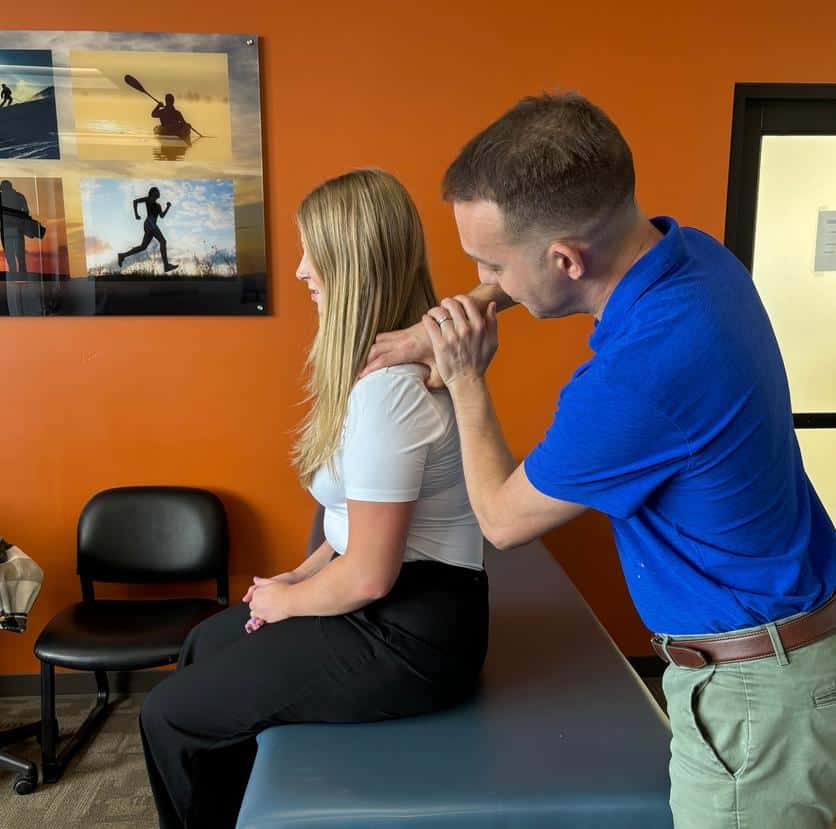
Fascial Distortion Model
The fascial system in the body builds a three-dimensional continuum of soft, collagen-containing, loose and dense fibrous connective tissue that permeates the body and enable all body systems to operate in an integrated manner. Alterations to the fascial layers can cause significant loss of functional abilities and increased pain.
In this model of manual treatment, the theory is that any injury, even a minor one such as a muscle strain, causes a distortion in the fascia, which is a significant cause of pain. The patient becomes the expert, not the therapist. It postulates that they subconsciously know what needs to be done to fix them and will then unknowingly communicate this to the therapist by specific word choice and gestures when describing their pain. The fascial distortions are then treated with specific manual techniques that are proven to be effective with no significant side effects.
Why is it important?
This is fantastic because you can treat pain regardless of the cause/source of pain, regardless of the diagnosis. There are very few contraindications and no significant side effects. You can have immediate results in pain reduction impacting improvements in range of motion, strength, coordination, and overall function. It has been proven to be more effective than traditional exercise and manual therapies alone, while also reducing dependence on medications.
Types of distortion
- Herniated Trigger Point
- Trigger Band
- Folding Distortion
- Tectonic Fixation
- Folding Distortion
- Cylinder Distortion
Frequently asked questions
What do the treatments consist of?
FDM utilizes manual techniques to correct alterations to the fascial planes. Most of the treatment is performed solely with the therapist’s hands, but occasionally may employ cupping or other instrument assisted techniques.
How long does it take?
The treatments are often completed in minutes or seconds, depending on how many distortions the patient has in the current presenting layer.
Does this cure the patient?
Not necessarily. While it may solve the underlying cause of pain in some cases, more often the injury/condition is still there. This is simply a great treatment model to help decrease the patient’s pain faster and promote faster tissue healing as well. For instance, if a pt has an acute ankle sprain, these treatments can greatly reduce or eliminate their pain, allowing them to return to sport in the same day, however their ligaments/tendons got strained and stretched, and allowing a time for therapy to re-stabilize the ankle is advised.
Are these treatments all the patient needs?
No. These treatments are done in conjunction with other traditional PT techniques, including functional activities, exercises, and soft tissue manipulation.
Can this be used for ANY type of pain?
Yes. FDM techniques can be very effective regardless of the source of pain or condition. Frozen shoulder, diabetic neuropathy, headaches/migraines, labral/tendon/ligamentous tear, muscle strain, sprain, joint replacements, etc. Even broken bones or bizarre pain descriptions can receive pain relief from these treatments.