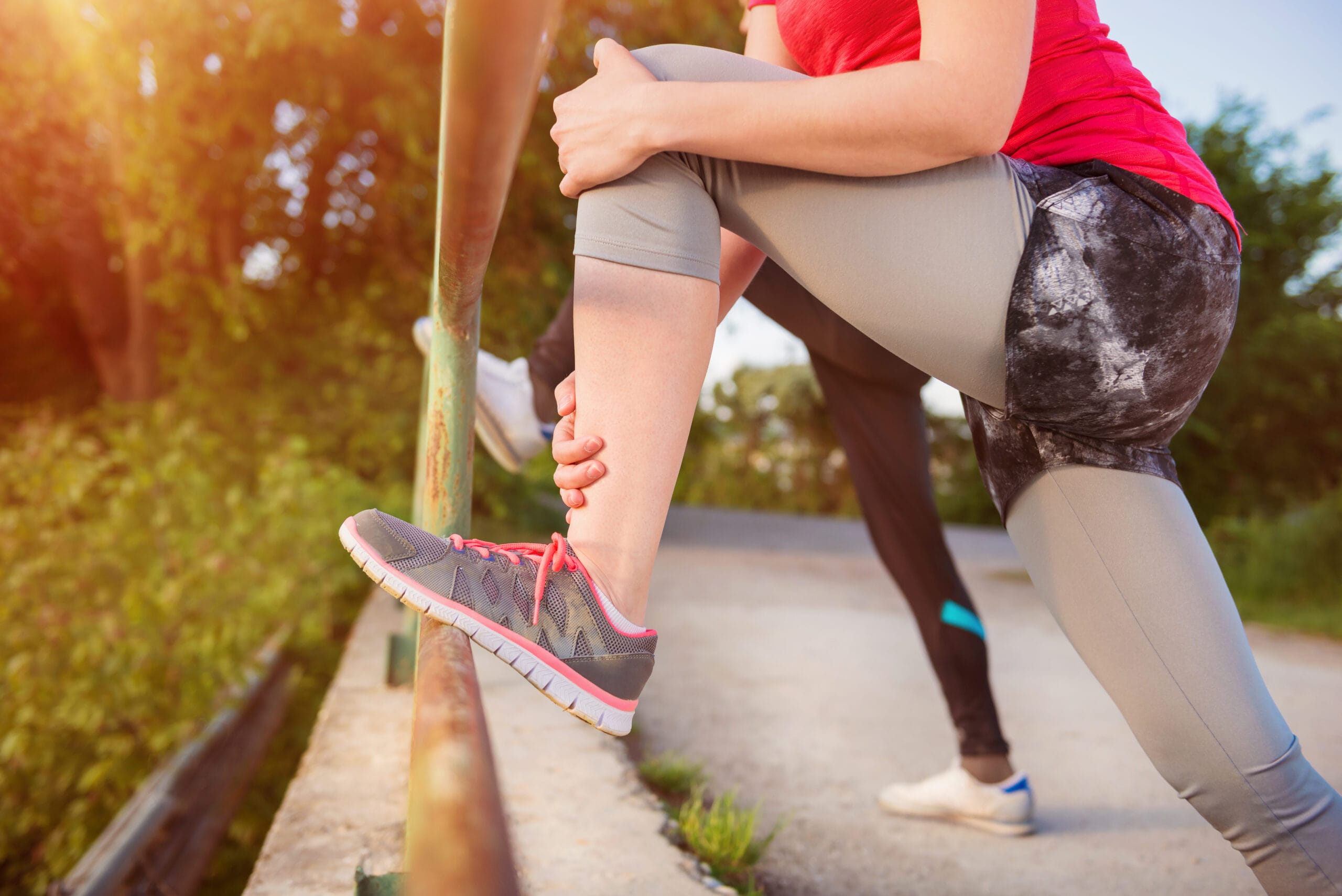
You’ve laced up. You’re motivated. Then, bam. Shin pain?
If you’re over 40 getting back into running, chances are you’ve already run into an annoying, all too common roadblock: shin splints.
It starts as a dull ache in the front or inner part of your shin, and suddenly your running comeback feels like it’s on hold. But here’s the good news: shin splints are preventable and treatable, even if you’re getting back into fitness later in life.
Learn how to prevent and recover from shin splints after 40 with expert tips, running plans, and physical therapy insights for women runners.
In this guide, we’ll explore:
- What causes shin splints in women over 40
- How to prevent them
- At-home recovery steps
- The best gear for injury prevention
- And a return-to-running plan tailored for midlife athletes
What Are Shin Splints, and Why Now?
Shin splints, or Medial Tibial Stress Syndrome, are a type of overuse injury that causes pain along the inner edge of your shinbone. The discomfort typically starts during or after a workout, especially when you’ve just restarted running.
So why do women over 40 experience shin splints more frequently when getting back into it?
Common Causes:
- Jumping into high-impact workouts too fast
- Loss of muscle mass and bone density
- Biomechanical changes from age or past injuries
- Poor footwear or worn out running shoes
- Hard surfaces like pavement
Why Women Over 40 Are at Higher Risk
As we age, our bodies change, and not just in ways we see.
- Bone density declines, especially post menopause, making your tibia more prone to stress.
- Muscle elasticity and joint mobility decrease, increasing strain on connective tissues.
- Running form and gait may change due to weight gain, old injuries, or sedentary habits.
That’s why a 25-year-old can hop into a 5K with fewer issues, while women over 40 often need a more structured and gradual approach.
How to Prevent Shin Splints After 40
Prevention is way easier than recovery. Here are smart, body-aware strategies to keep shin splints from sabotaging your routine.
Prevention Tips:
- Follow the 10% rule, don’t increase weekly mileage by more than 10%.
- Warm up thoroughly with dynamic stretches (not static).
- Wear running shoes designed for your foot type (get fitted if unsure).
- Run on softer surfaces like tracks, trails, or treadmills.
- Add strength training, especially calves, glutes, and core.
- Don’t skip recovery days. Your body needs them more than ever.
Pro Tip: If you’re running 3x/week, cross-train on other days with swimming, yoga, or cycling to build endurance without added impact.
Shin Splints Recovery Plan (At Home, No PT Needed)
If you already have shin splints, don’t panic, and definitely don’t push through the pain. Early care means faster healing.
What To Do:
- Rest: Take a break from running (1–2 weeks).
- Ice: Apply ice for 15–20 minutes, 2–3x per day.
- Elevate & Compress: Especially after activity.
- Switch to low-impact cardio: Elliptical, bike, swimming.
- Foam roll and stretch: Focus on calves, Achilles, and arches.
When to See a Specialist
If shin pain doesn’t improve after a couple weeks, worsens at night, or comes with swelling or bruising, it could be something more serious like:
- A stress fracture
- Compartment syndrome
- Tendonitis
“Physical therapists can help manage your initial shin splints by managing acute pain through various manual techniques, modalities, and strength and mobility activities. We can also evaluate running mechanics to identify potential biomechanical factors causing your pain and help set up a way to correct these findings. With these findings, the ultimate goal would be to help prevent shin splints from recurring and returning to your everyday activities pain-free!”
Best Running Gear for Shin Splint Prevention (40+ Friendly)
Here’s gear worth investing in:
| Gear | Why It Helps |
| Stability Running Shoes | Support for overpronation and shock absorption |
| Compression Sleeves | Improves circulation and reduces inflammation |
| Foam Roller or Massage Gun | Eases tightness in calves and shins |
| Orthotic Insoles | Custom or OTC support for flat feet or high arches |
Tip: Look for women-specific shoes that account for heel shape, Q-angle, and arch structure.
Comeback Plan: A Gentle Return to Running for Women 40+
You don’t have to give up running, just run smarter. Here’s a 2 week sample plan for your post recovery comeback.
Week 1:
- Day 1: Walk 5 mins + Run 1 min / Walk 2 mins (repeat x4)
- Day 3: Strength training + stretching
- Day 5: Walk 10 mins + Run 2 min / Walk 2 min (repeat x3)
Week 2:
- Day 1: Run 3 min / Walk 1 min (x3), walk cooldown
- Day 3: Cross-train (bike or swim)
- Day 5: Run 5 min / Walk 2 min (x3), foam roll post-run
Gradually increase the running intervals while listening to your body.
Q&A:
Q: Can women over 40 run with shin splints?
A: It’s best to stop running if shin splints are painful. Use low-impact activities while recovering.
Q: What’s the fastest way to heal shin splints after 40?
A: Rest, ice, proper footwear, and strength training are key. Avoid rushing your return.
Q: Are shin splints more common after menopause?
A: Yes. Hormonal changes can impact bone density and soft tissue recovery, increasing the risk.
Final Thoughts: This Isn’t the End of Your Running Story
Dealing with shin splints in your 40s can feel discouraging, but it’s not the end of your comeback.
With smart training, body awareness, and the right tools, you can run stronger than ever. Age isn’t the problem, rushing is. Give your body time to adapt, and it will rise to the challenge.